The Art of the No Save Run in Alien Isolation
@mynosaverunhub
October 17, 2026 · 6 min read
When I first attempted a no save run of Alien Isolation, I thought I understood survival horror. I was wrong. The game demands patience, but without the safety net of reloading, that demand becomes something else entirely. It becomes a meditation on consequence. Every sound in the vents, every flicker of the lights, every distant groan of the Sevastopol Colony carries weight because you cannot undo a mistake. You live with it, or you start over from the beginning.
Why No Save Changes Everything
In standard play, dying to the Xenomorph means loading a checkpoint. You learn its patrol routes, you experiment with the Flamethrower, you test how close you can get before the Motion Tracker screams. But a no save run strips away that trial-and-error luxury. One misstep in the Medical Bay, one poorly timed sprint in The Nest, and hours of progress vanish. The tension is not simulated; it is real. Your own memory of the run becomes the only save file.
This approach transforms the game into something closer to a live performance. Every encounter with Amanda Ripley and the alien feels scripted, but it is not. The unpredictability of the AI, the random pathing of the Xenomorph, the placement of items - all of it conspires to break you. A no save run forces you to treat each moment as permanent. That is where the fear lives, not in the jump scares but in the knowledge that you cannot rewind.
The Challenge of Nightmare Difficulty
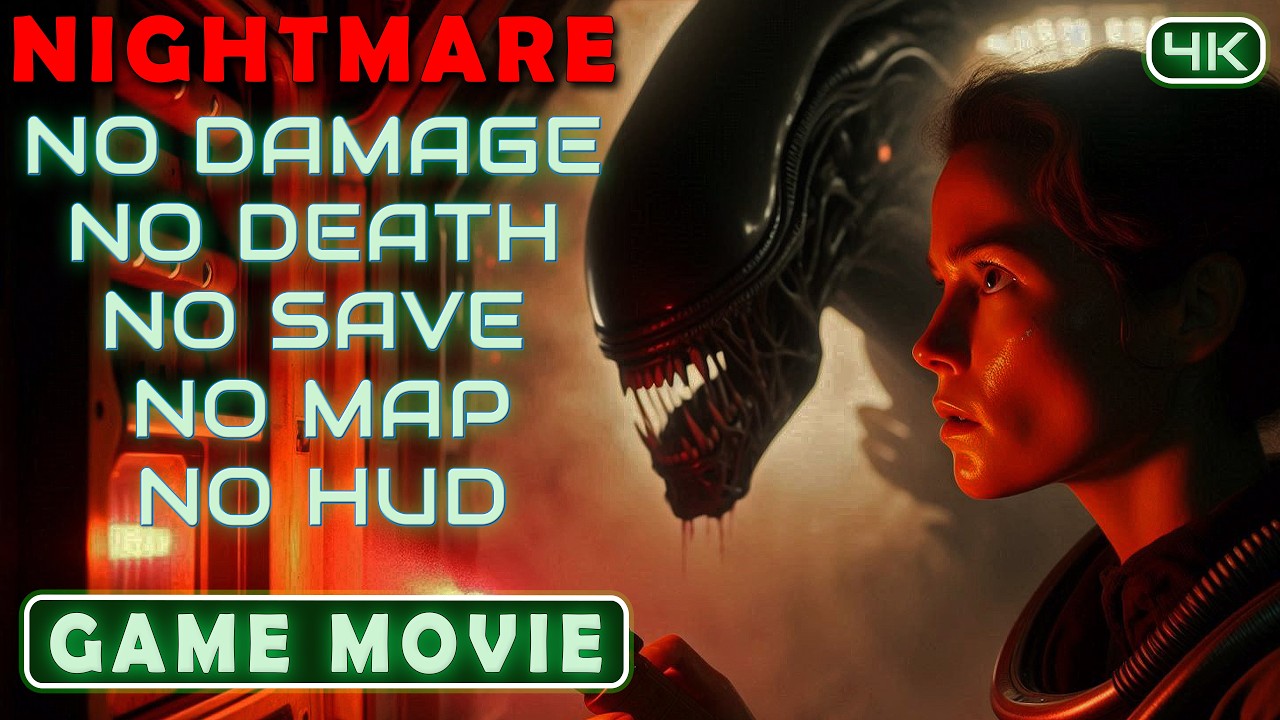
Pairing a no save run with Nightmare difficulty is a particular kind of masochism. Resources are scarce. The Flamethrower fuel you find in the first hour might be all you get for the next three. The Motion Tracker becomes a lifeline, but it also draws attention if you use it too often. On Nightmare, the Xenomorph is faster, smarter, and more aggressive. It does not give you room to breathe.
I remember one session in the Sevastopol Colony, hiding in a locker while the creature stalked the corridor outside. In a normal run, I would have waited thirty seconds and then moved. But in this run, I waited five minutes. I counted its footsteps on the metal grating. I watched the motion tracker flicker. The tension was unbearable, but that is the point. A no death run requires that kind of patience. You do not act until you are certain, and even then, you hesitate.
The no damage run adds another layer. One hit from the Xenomorph usually means death on Nightmare, but even a glancing blow from a human enemy can ruin a perfect streak. Avoiding damage means mastering the game's systems: knowing when to run, when to hide, when to use a noisemaker. It is a puzzle that demands precision, and a no save run punishes every loose end.
Immersive Presentation: No HUD and 4K
Removing the HUD deepens the immersion. Without a visible health bar, without a crosshair, without objective markers, you rely on visual cues and sound. The 4K resolution sharpens every detail of the Sevastopol Colony, from the grimy tiles of the Medical Bay to the organic horror of The Nest. The game becomes cinematic in a way that no-commentary playthroughs capture perfectly. You are not playing a game; you are living inside a film.
I have watched several no-commentary playthroughs of this run. The absence of voiceover lets the sound design do the work. The hiss of the vents, the distant scream of a colonist, the thump of the alien dropping from a ceiling grate - it all builds an atmosphere that words would only dilute. The 4K resolution makes the lighting pop, the shadows deeper, the alien more terrifying. It is survival horror at its most pure.
The Mental Game
What surprises most people about a no save run is the mental fatigue. You are not just fighting the game; you are fighting your own impatience. The temptation to rush through a familiar section, to skip checking the Motion Tracker, to assume the alien is elsewhere - that is what kills you. I have lost runs in the first hour because I got cocky. I have lost runs twelve hours in because I got tired.
Managing that exhaustion is a skill. Breaks help. So does staying hydrated and keeping the room cool. But the real trick is to never let the tension drop. Once you feel safe, you are lost. The game punishes complacency harder than it punishes mistakes. A no death run demands constant vigilance, not just skill.
How to Approach Your Own No Save Run
If you want to attempt this, start by learning the game normally. Understand the alien's behavior. Memorize the layout of the Sevastopol Colony. Know where the Flamethrower spawns, where the medical stations are, and how to bait the Xenomorph into vents. Then, and only then, attempt the run.
A few practical tips:
- Use the Motion Tracker sparingly. It drains batteries fast, and on Nightmare difficulty, batteries are rare. Listen for audio cues instead.
- Never stay in one hiding spot too long. The alien learns. Move between lockers, under desks, and through vents to stay unpredictable.
- Save your Flamethrower fuel for emergencies. One well-timed burst can clear a path to a save point, but you have no save points in a no save run. Still, the Flamethrower is your only sure way to drive the alien off. Use it wisely.
- Take the slow route. Sprinting is loud and attracts attention. Walking keeps you under the alien's radar.
- Know when to quit. If you are too tired or frustrated, the run will end badly. Step away and come back fresh.
What Makes It Worth Doing
People ask me why anyone would put themselves through this. The answer is simple: the experience is unlike anything else in gaming. The atmosphere of Alien Isolation is already masterful, but a no save run elevates it to something transcendent. Every heartbeat feels earned. Every narrow escape is a story you will tell. The tension is not manufactured; it is authentic, born from the real risk of losing everything.
The no-commentary format suits this run because words cannot capture the feeling. You have to live it. The 4K resolution and no HUD presentation make the game feel less like a game and more like a nightmare you are trapped inside. The Sevastopol Colony becomes a real place, the Xenomorph a real threat, and Amanda Ripley a real person fighting for her life.
In the end, a no save run is not about proving you can beat the game. It is about proving you can endure it. And when you finally see the credits, knowing that every step was permanent, every decision final, you will understand why some of us keep coming back to this cold, dark station in the middle of space.